Showing posts with label Bird watching. Show all posts

Friday, 8 April 2022

Time with Kes

Over the past year or two I have spent a lot of time with Kestrels, initially by accident and then by design. Lockdown started it all, enforced localness meant a concentration on the birds to be found in the lanes and farmland that I could walk to from home. I soon learnt where the good spots were to watch the resident Kestrels and take photos. I found myself going back to these spots in the hope that a Kestrel would be perched up within camera range perhaps doing something interesting like dismembering a small bird or rodent. 

Just over a year ago I changed by old Canon DSLR and lenses for a new lighter Olympus camera system and found myself more often with a camera and telephoto lens hanging off my shoulder ready to be pointed at the local wildlife. This opportunistic approach yielded some nice results and meant that walks which from a Norfolk birding perspective might have seemed a bit quiet became richly rewarding when one of the resident birds performed for me. 

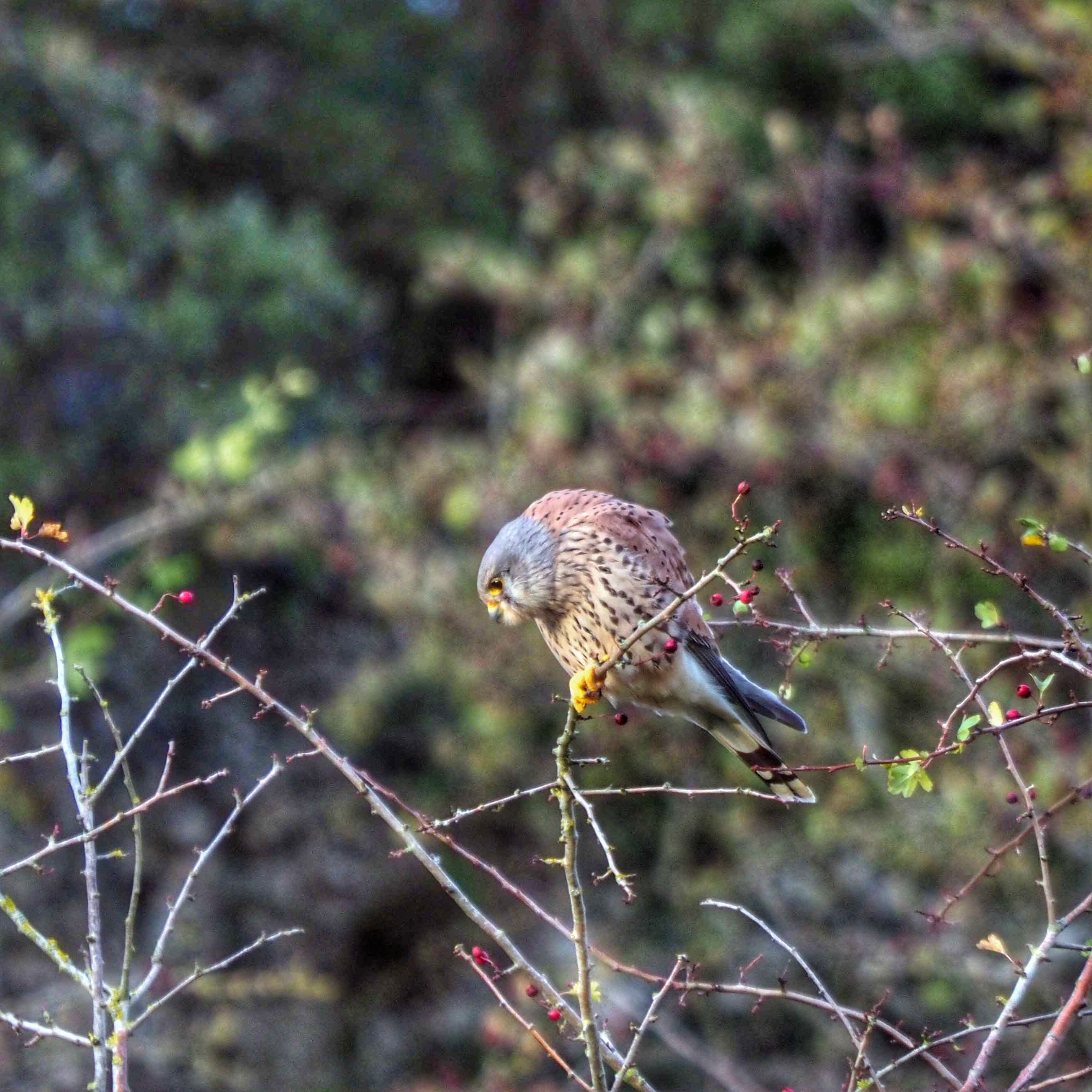
Taking these pictures and spending a little time with these birds also reminded me of just how smart they are, the males in particular have the most wonderfully intricate plumage with yellow beaks and feet set off against a slate blue head, a speckled chest, a rufous brown back. Their ability whilst buffeted by the wind to hold their heads still as if mounted on a gyroscope as the intently stare at the ground for prey is both impressive and a little scary if you think what it must be like as a small mammal to have one of these top predators hunting nearby. 

Kestrels also represent a sense of continuity in my birding life, growing up in north London and cutting my birding teeth in the capitals parks and open spaces, Kestrels were the first bird of prey that I became familiar with. This was a time when to see a Sparrowhawk was an occasional treat both because they were much scarcer then and also because I hadn't developed the birding skills to easily pick them out as they sped by. As for the raptors that I see on a daily basis now in north Norfolk, Marsh Harriers, Buzzards and Red Kites were the birds of my dreams and very occasional treats on local RSPB group coach trips to birding hot spots. Yet now I am more likely to see one of these three species on a casual walk or drive than I am a Kestrel locally. 

As Covid restrictions eased I enjoyed the ability to travel a little further afield to some of the birding hot spots close to home: Titchwell, Holkham and Holme. But still I have found myself revisiting my local Kestrel territories camera in hand hoping to snatch some more candid snaps of these enigmatic little raptors.
Male Kestrel keeping its head still despite being blown around by the wind.

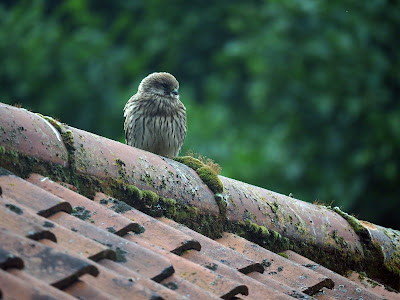
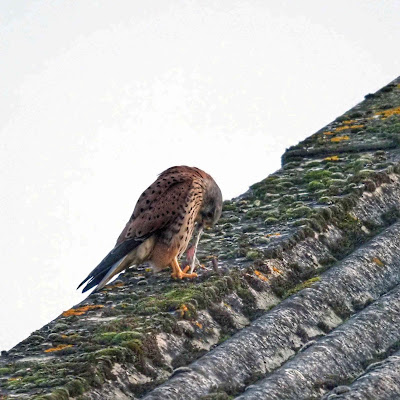
Kestrel on the roof

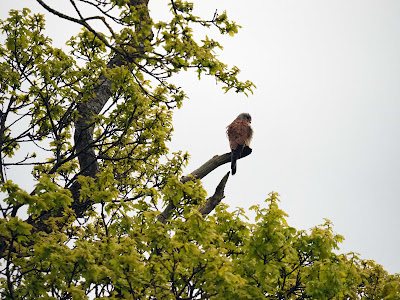
A perfect combination of a male Kestrel and freshly opened Oak leaves

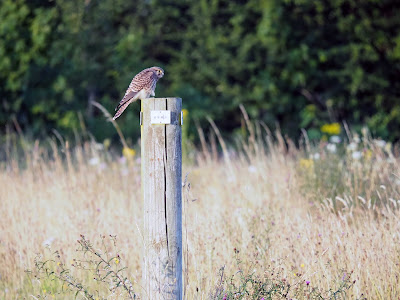
A favourite post to sit on and regurgitate pellets

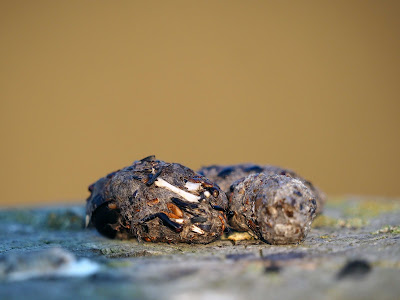
Kestrel pellet 

Kestrel inspecting the ground for prey

Kestrel pulling at the sinews of its prey.


Sunday, 4 August 2019

Crab on the menu

We are in the middle of a series of big spring tides at the moment. This morning I walked along the West Bank Path at Titchwell, the Fresh Marsh to my east stuffed full of migrating Shorebirds including half a dozen delicate Wood Sandpipers delicately picking insects from the surface of the shallow lagoon. Out in the middle of the Fresh Marsh 14 Spoonbills were doing what Spoonbills seem to like to do best, sleeping. 

Wood Sandpiper, Titchwell Marsh
To my west was the expanse of saltmarsh that lies between Titchwell and Thornham Harbour, the incoming tide creating pools that reflected the bright blue August sky and which were rimmed by the purple flowers of Sea Lavender. A Curlew picked its way through this salty meadow and I paused to take a photo that would capture the bird and its high summer home. 

Curlew, Titchwell Marsh
As I watched the Curlew caught a crab in the tangle of submerged vegetation and held it firmly at the end of its long down curved bill, I wondered how it would manage to transfer the small crustacean, which was frantically and ineffectually waving it's limbs, down into its stomach. Several times it managed to manoeuvre the crab half way up its bill before having to start again as the crab wiggled back towards the tip of the bill and survival. Then with one last effort the Curlew suddenly had the crab at the top of it mouth and then it was gone, still wriggling down its throat. 

Curlew, Titchwell Marsh
The Cormorants in the dead trees in the reedbed by Patsy's Pool sat still in the early morning warmth their black feathers presumably exacerbating for the them the warmth of the rising summer sun. 

Cormorant, Titchwell Marsh

Sunday, 12 March 2017

Watching Turnstones, turn stones

Turnstone, Holme Beach
I spent a pleasant hour this morning on Holme Beach with the family. It was a grey morning with a hint of rain in the air, despite this and the relative remoteness of the location there were still a fair number of folk out and about with all the usual issues of disturbance to the wildlife you are trying to watch or photograph by their dogs.

Whilst the kids had a play in the sand I focused my attention and rather slow and very old 100 - 300 zoom on a Turnstone that was feeding on the strand line. By approaching the bird carefully and avoiding any sudden movements I was able to get a few nice shots and also to observe it's feeding technique.
Turnstone doing exactly what its name suggests it should do
At first it was working its way through some seaweed and I thought of its old Norfolk name of Tanglepicker, then it moved up the beach onto some dryer sand and started feeding there. It did this by turning over stones and probing deep into the sand with its beak, whenever it removed its face from the sand and turned to face me the birds forehead was covered in a sandy mask.

Turnstone searching for food
What impressed me though was the strength of its neck muscles, it would rapidly move between pebbles, quickly inserting its beak at their base and with a twist and flick of its neck turn the stone over, often flicking stones that looked like they weighed more than the bird into the air, quite impressive.
Turnstone, Holme Beach

I like Turnstones, they are adaptable and approachable and if a bird can have character I think they have it in spades, they are in trouble too with a declining population. You can read more about Turnstones in this excellent blog Why do Turnstones eat chips