Showing posts with label birdwatching. Show all posts

Friday, 8 April 2022

Time with Kes

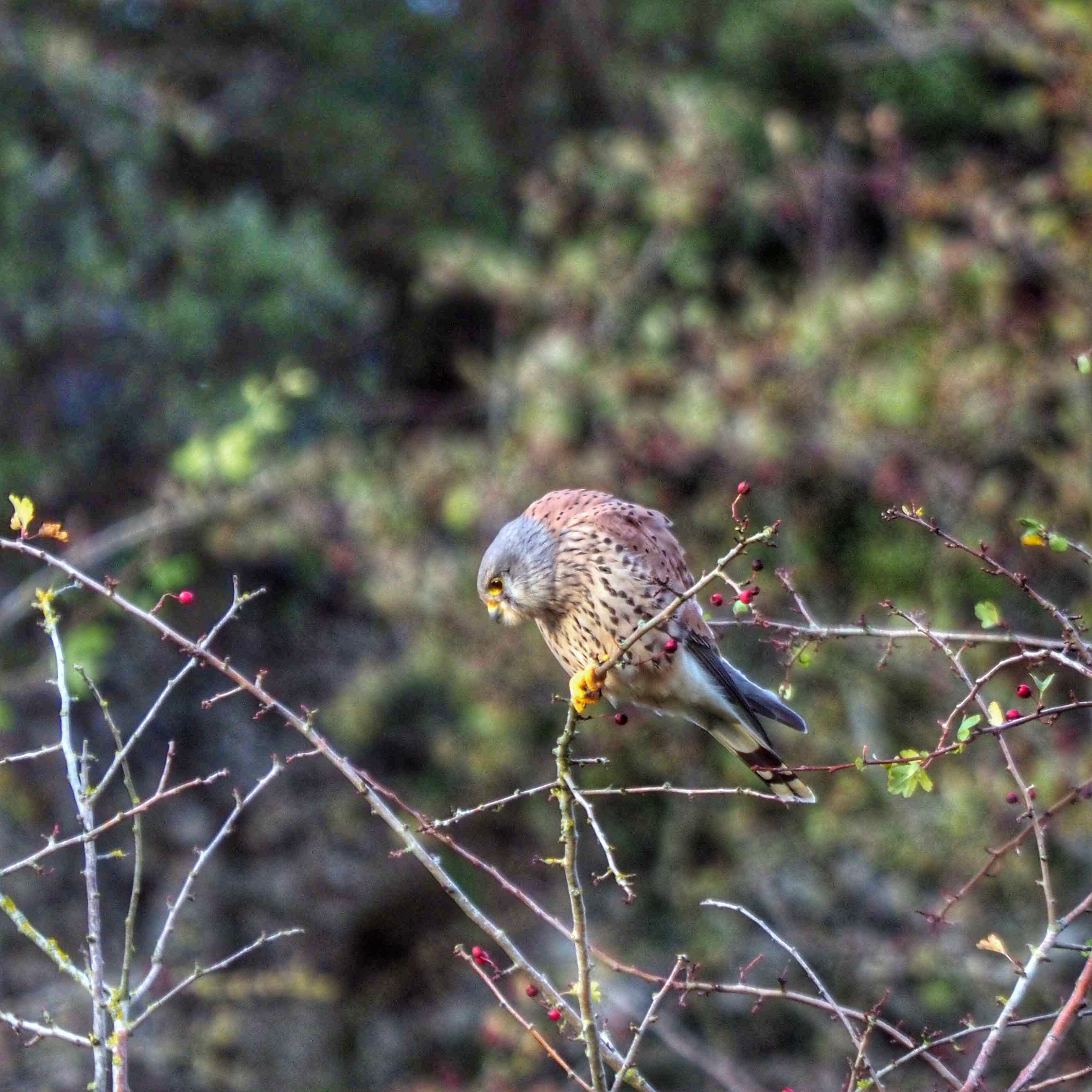
Over the past year or two I have spent a lot of time with Kestrels, initially by accident and then by design. Lockdown started it all, enforced localness meant a concentration on the birds to be found in the lanes and farmland that I could walk to from home. I soon learnt where the good spots were to watch the resident Kestrels and take photos. I found myself going back to these spots in the hope that a Kestrel would be perched up within camera range perhaps doing something interesting like dismembering a small bird or rodent. 

Just over a year ago I changed by old Canon DSLR and lenses for a new lighter Olympus camera system and found myself more often with a camera and telephoto lens hanging off my shoulder ready to be pointed at the local wildlife. This opportunistic approach yielded some nice results and meant that walks which from a Norfolk birding perspective might have seemed a bit quiet became richly rewarding when one of the resident birds performed for me. 

Taking these pictures and spending a little time with these birds also reminded me of just how smart they are, the males in particular have the most wonderfully intricate plumage with yellow beaks and feet set off against a slate blue head, a speckled chest, a rufous brown back. Their ability whilst buffeted by the wind to hold their heads still as if mounted on a gyroscope as the intently stare at the ground for prey is both impressive and a little scary if you think what it must be like as a small mammal to have one of these top predators hunting nearby. 

Kestrels also represent a sense of continuity in my birding life, growing up in north London and cutting my birding teeth in the capitals parks and open spaces, Kestrels were the first bird of prey that I became familiar with. This was a time when to see a Sparrowhawk was an occasional treat both because they were much scarcer then and also because I hadn't developed the birding skills to easily pick them out as they sped by. As for the raptors that I see on a daily basis now in north Norfolk, Marsh Harriers, Buzzards and Red Kites were the birds of my dreams and very occasional treats on local RSPB group coach trips to birding hot spots. Yet now I am more likely to see one of these three species on a casual walk or drive than I am a Kestrel locally. 

As Covid restrictions eased I enjoyed the ability to travel a little further afield to some of the birding hot spots close to home: Titchwell, Holkham and Holme. But still I have found myself revisiting my local Kestrel territories camera in hand hoping to snatch some more candid snaps of these enigmatic little raptors.

Male Kestrel keeping its head still despite being blown around by the wind.

Kestrel on the roof

A perfect combination of a male Kestrel and freshly opened Oak leaves

A favourite post to sit on and regurgitate pellets

Kestrel pellet 

Kestrel inspecting the ground for prey

Kestrel pulling at the sinews of its prey.


Sunday, 21 June 2020

Can you ever have too many Avocet pictures?

Avocets, Frampton Marsh

I enjoyed taking this image, the marsh was full of Avocets and I was having fun trying to get pictures of them in flight. I started to try and make sense of the activity around me by focusing on single birds, but as I became more attuned to the action going on around me, I noticed that often pairs of birds would take flight together or that two or three birds would converge in the air as they chased each other away from their patch of ground.

There is something very elegant about Avocets. Their plumage the crisp lines between the black and white feathers, the long blue grey legs on which they daintily wade through muddy shallows, and that distinctive long black scimitar bill for sifting small shrimps out of the marsh.

Avocets have a suitably tragic and well known back story as a species, a history inextricably linked in with that of the RSPB who have adopted the species as their emblem in acknowledgement of the hope that their work on these birds in helping them to recover from extinction as a breeding bird in the UK. Work that gives hope to their work on other threatened birds.

By dint of where they live and also perhaps where they don't, Avocets will be associated in many birders minds with great days out in amazing places on the coast: Minsmere, Titchwell, Frampton a roll call of our best nature reserves, where today you are almost guaranteed to see these special birds. Hope made real in flesh and feathers, a Lazarus bird brought back from UK extinction and whose spread has been facilitated by the creation of new nature reserves with suitable habitat for Avocets and a range of other wetland birds.

In response to some frustrating behaviour by some photographers, I once heard an exasperated warden exclaim something along the lines of "Aren't there enough pictures of Kingfishers in the world!" Indeed sometimes when leafing through portfolios of award winning images of UK wildlife I have felt the same. But I think on reflection that misses at least part of the point. Taking pictures of Kingfishers, Avocets and a whole range of other species gives people pleasure, it gives them a sense of connection and it can give friends and family pleasure too. All of which I hope leads to a sense that these species and the places that they live are worth looking after.

Taking this picture gave me pleasure, I have taken pleasure from the reaction of others to it over on my Instagram page and I have taken pleasure from the fact that there is more to it than may be apparent on first viewing.

Looking at it I feel that the image has a balletic feel to it, the upper bird appears to be releasing the lower bird to let it swoop elegantly away, as if they were performing some avian version of Swan Lake.  And yet that isn't what was happening, this 1600th of a second moment frozen in time is not of two birds in a loving aerial dance, but of a dog fight above a east coast marsh on a mid-summer morning. The Avocets here were in a constant state of agitation, as soon as I opened my car door I was hit by a soundscape full of their kloot, kloot calls as pairs of Avocets chased away their neighbours and any other birds who had the temerity to enter their air space.

In essence they were behaving less like ballerina's and more like badly behaved super models. In doing so they were living up to their reputation as notoriously anti social birds. Thinking back I can vividly remember watching an Avocet colony on a Dutch marsh where one adult bird grabbed a neighbours chick in its delicate bill and throttled it under the water until the young birds parents flew in screaming to rescue it. In Norfolk I have watched pairs of Avocets rising to the sky to harry and chase away birds many times their size including potential predators like Grey Herons.

I witnessed these behaviours and had the chance to grab on film fractions of seconds for posterity, because sitting overlooking a marsh watching the birds, anticipating their behaviour and thinking about technically how I can grab a shot worth sharing, all that gives me pleasure. It also means for me at least that I am even more inclined to want to protect and share the places where these elegant if slightly anti-social birds thrive.


Saturday, 20 June 2020

Hope, Cranes and the Lockdown


Context is hugely influential in how we experience and think about nature and 30 odd years ago for me as a young birder that meant a frame of reference formed by the London parks where I had done most of birdwatching. On this occasion though I wasn’t in London, but with a friend who lived close to the Norfolk Broads. We were standing at the end of bitterly cold and snowy winters day on the edge of the marshes with the distinctive shape of Horsey Mill behind us. A family party of Whooper Swans had just flown past, Marsh Harriers were drifting over the large reedbed and then there they were bugling as they went by a pair of Cranes. To me back then these were mythical creatures, part of a tiny population of pioneering birds recolonising this wild eastern edge of England. Soon they disappeared from view as they dropped into their night-time roost site.

So when one evening this April, several decades later and in a different corner of Norfolk, two Common Cranes appeared over the rounded slope of the arable field I was walking past, not only did I feel the excitement I always experience when seeing these majestic birds, but they also triggered memories of that first sighting in the Broads and some of the work that I have been involved in over the years with RSPB to help create places where Cranes if they so choose can live and thrive.
Lockdown Cranes, Hunstanton

The Cranes as they flew past me high and heading north were unmistakeable large grey birds with long legs and necks topped by a red heads. I had thought that given the lockdown restrictions it would be many months until I got the chance to travel into Crane country, and it was this sense of them as an unexpected and short lived treat that made this experience all the more special. The birds were soon gone, my encounter with them lasting less than a minute, time to relish the moment and grab a couple of record shots with my camera. Then once they were out of sight I sent a text to a friend who lived half a mile away suggesting they get out in their garden in case they could see them from there. The message I got back was an unhappy one, pointing out that they had walked past the same field twenty minutes earlier and no they couldn’t see or hear the Cranes from their garden.

Cranes were once a widespread bird of the British Countryside, but like so much else of our native wildlife they disappeared from the landscape and our national consciousness centuries ago, victims of hunting and habitat loss. Then something amazing occurred they found their way back. Initially this happened slowly in remote marshland in the Norfolk Broads, where pioneering birds started their nesting attempts in the late 70’s on the Horsey estate. Slowly as this population grew in size, it started to expand its range across the Broads and then into the Fens where the first Cranes to nest in this famously flat landscape in four centuries chose to do so at the RSPB’s Lakenheath Fen Nature Reserve.

Now Lakenheath Fen is an amazing place to visit hooching with life on a spring day. This is a man made landscape,  a small restoration of the once extensive wild and wet Fens that were drained for agriculture. Until they were drained the Fens were England’s great wetland, but the drainage not only sucked water out of the fens but also wildlife. Then back in the early 1990’s the RSPB’s East Anglian region team based in Norwich were looking to buy a piece of land in the Fens that could be used to create a new wetland nature reserve away from the coast and the threat of sea level rise, where species like Bitterns and Marsh Harriers could thrive. Never in their wildest dreams did they think that within a couple of decades Cranes would be nesting on the wetland they created. Following an appeal the RSPB were able to buy the land for this project at Lakenheath, land which at the time it was being used to grow carrots. To lead the task of turning 400 hectares of carrot fields into a wetland they appointed Norman Sills as warden. Norman had spent the previous couple of decades setting up the famous RSPB nature reserve at Titchwell Marsh on the north Norfolk coast and is a bit of a genius when it comes to taking a piece of land and creating a wildlife rich wetland.

Today you can take the train from Brandon past Lakenheath Fen, a journey across arable fields until you pass the reserve, a landscape of swaying reeds over which glide Marsh Harriers and if you are lucky you may catch a glimpse out of the train window of one of the reserves two pairs of Cranes.

In 2010 whilst the Cranes in eastern England, in the Fens and the Broads, were slowly building up their population a partnership called the Great Crane project made up of WWT, RSPB and Pensthorpe Conservation Trust, with major funding from Viridor Credits Environmental came together to give our wild Crane population a boost in the west of England on the Somerset Levels. Here on England’s largest area of wetland and grazing marsh, a landscape criss-crossed by dikes and marshes dotted with grazing cattle over a five year period 93 Cranes were released into the wild by the project.

Helped by nature conservation organisations, landowners and other’s Cranes have done well in England in recent decades slowly reclaiming bits of the landscape their ancestors would once have occupied. A sort of long-legged giant Canary in a coalmine, whose presence is a symbol of where landscapes are wet enough and wild enough to have these birds back. They show where, as a society, we have been able to make space for nature, not just for Cranes but for the wild ecosystem’s and nature friendly farmland on which they rely.

Last year there were an amazing 56 pairs of Cranes nesting across the UK, and although their strongholds are still in the Broads, Fens and Somerset Levels birds can be found in other areas too. At least 85% of the UK population of Cranes are found on protected sites with a third of these on RSPB nature reserves, wild places where they can breed undisturbed safe away from people.

All of which means that at a time when because of lockdown my physical horizons had shrunk to the places I can easily reach on foot from my house. I was able to stand by the side of a non-descript arable field, on the edge of the small east coast town that I call home, with a pair of Cranes briefly adding some sparkle to my daily exercise walk and for the Cranes to remind me that when people come together we can bring nature back into our landscapes and our lives.

After the Cranes have flown out of sight over the wood to my north, I scribble the record in my notebook and remember the late American writer and explorer Peter Matthiessen’s book Birds of Heaven about his journeys around the globe in search of the worlds different Crane species. In this book he coins a lovely phrase to describe those of us who like him are smitten by these elegant and enigmatic birds and the wild places where they live, he called himself and us Crainiacs, I like that.
Saturday, 16 May 2020

Snapshots of Lockdown from a small east coast town.


The last few days have felt simultaneously strangely familiar and yet disconcerting and worrying. With the relaxation for now of the lockdown restrictions there has been a increase in traffic and people around Hunstanton and the surrounding coast and countryside, still not at the levels we would normally expect but much busier than it has been. With this increase in people out and about, there has also been an increase in rumour, opinion and worry; does the holiday cottage at the end of someones road now have people in it, will we be inundated with folk 
this weekend and with them an increased risk of the virus

This shift back towards a more normal number of people and cars is a bit of a jolt we have been lucky living in a relatively sparsely population corner of England. Whilst the Virus is present in the local population we have been able to isolate ourselves and enjoy quiet walks and bike rides, that sense of peace and tranquility and accompanying feeling of relative safety now seems to be fading away and will for a while at least be missed. 

Today we went for a walk in our local woods and you could see those small personal judgements made in households, about maybe relaxing social distancing rules just a little bit starting to multiply when applied to the population at large. Groups of four or five teenagers on mountain bikes, inter-generational family groups walking together, workmen standing close together discussing a job. All small personal decisions but when multiplied it makes you wonder whether we will soon see another rise in infections. 

We have two good local walks which we have been able to lengthen and shorten according to need. One takes us down Lovers Lane along the oak lined track that is Downs Road and then towards Ringstead Downs. The other walk goes along Old Hunstanton Beach towards Holme and then back along the edge of the River Hun past the Golf Course. Since Lockdown began on 23 March I have managed to see or hear 101 species on walks from home mainly on these two routes. 

As spring has progressed I have watched as the fields either side of Lovers Lane turned a vibrant shade of yellow as the Oil Seed Rape bloomed and now as the Rape sets seed these fields have faded to green. I have learnt the best fields to search for Wheatear's in Spring and which hedgerows to pause by to listen for the songs of Lesser Whitethroats. On the coast path we have enjoyed watching dueling Green Hairstreaks and basking Wall Brown Butterflies. 

It has been these walks on my own and with the family that have helped to keep me fit and sane over the last couple of months, indeed more than that I have enjoyed getting to know the small east coast town that I call home and its surrounding countryside better and watching a season unfold in my local area. 

Soon Spring will give way to Summer, already the swaying hazy white blooms of Cow Parsley have taken over from Alexanders in the hedgerows and soon the Cuckoos will fall silent. Whilst lockdown is being lifted a little for now I will be focused on my home ground and on the walks that I can do from home for some time to come.

I have been trying to post regular pictures and accompanying words on my Instagram account here 
https://www.instagram.com/bull_of_the_bog/

Wednesday, 10 January 2018

A Look back on 2017

Every year is different and 2017 felt like a year that started well and then bird wise petered out into a bit of a damp squib in the autumn. Below are a few highlights of my bird and wildlife watching year based on the Norfolk Coast with the occasional foray further afield.

Boat dashboard in a Norfolk harbour
January and I can still see the scene a brute of a Glaucous Gull on the Fresh Marsh at Titchwell eating the corpse of a Herring Gull. It really did stand out from the large numbers of Herring Gulls present even from a distance. The fact that it had a food source also meant that it hung around and was easy to find.


Glaucous Gull and dinner at Titchwell
Each year I get a "volunteering day" at work and this year I decided to carry out two Beached Bird Survey sections on Sunday 26 February. This meant walking the tideline from Old Hunstanton to Holme and from Titchwell to Thornham Point. I found just three dead birds on this long stretch of coast the most interesting being a Common Scoter. I unfortunately also found a large number of shoes: single kids welly's, deck shoes etc and a large number of sealed dog poo bags abandoned by their owners and washed up on the beach. 


Dead Common Scoter during Beached Bird Survey
The birding was good with the best birds being a small flock of Snow Buntings just east of Old Hunstanton and single Merlin and Peregrine resting on the shingle bank that is forming off Holme

Spring and my Great Aunt died and I decided to do a day trip to west Yorkshire to attend the funeral. Before the service I had a brief walk on the moors and saw some Red Grouse. In the late afternoon I went down to the River Wharfe at Bolton Abbey to clear my head and had a wonderful walk the air full of hirundines and on the river Mandarin Ducks and Dippers to set me up for the long sugar fuelled drive home to Norfolk.

The first of a trio of Rares that I saw in the spring was a very unexpected Red Flanked Bluetail at Titchwell on the evening of Sunday 26 March. Given given how poor the autumn was a doubly good bird to get. Then on the 6th of May I joined the crowd at Choseley to watch a Red Footed Falcon hunting over the fields for a couple of hours before it suddenly disappeared. Saturday 6th May and I spent an enjoyable hour in the car park at Holme watching a stunning summer plumage Red Breasted Flycatcher. 


Red Flanked Bluetail, Titchwell

Red Footed Falcon, Choseley

Red Breasted Flycatcher, Holme
But much of my time in the field these days is spent in the company of my family and at Whitsun half term we had a weeks family holiday on the Northumberland Coast. On the first of June we booked on the whole day excursion to the Farne islands landing on Staple Island and Inner Farne and had a simply amazing time watching Puffins landing with beak full's of sand eels running the gauntlet of Herring Gulls and the crazy antics of nesting Arctic Terns on Inner Farne perched on our heads and crapping down our backs. 


Arctic Tern making memories for the boys on Inner Farne
In early June a work trip took me north to Speyside and a chance to briefly revisit some of my old haunts, places that I have visited and loved on and off for the last 35 years. What struck me most as I looked out of the Osprey Hide at Loch Garten was the amount of regrowth of the forest with the view changed considerably since my first visits back in the eighties. Bird wise it was a little quiet [and very wet] but the prize for least expected bird of the year probably goes to a male Woodchat Shrike in the Findhorn Valley a pretty good but not quite adequate consolation prize for not seeing a Eagle here.


Forest Regeneration, Glen Feshie

My oldest son was eight this year and old enough to accompany me on a evening visit to Dersingham Bog in search of Nightjars, we invited his friend and his dad to join us. Labelling this as a Nightjar walk was in hindsight a mistake as we had one of the worst evenings for them that I can recall [we did get very brief views and heard them churring] But the kids loved their night hike and especially the large numbers of Glow worms around the boardwalk. 

Another wildlife highlight shared with the kids was at Holkham Pines in early August when we realised that we were in for a great butterfly day with the boys enjoying stalking them and trying to catch them by hand. A Dark Green Fritillary was the best of the day for me. 


Dark Green Fritillary, Holkham
As a family we spend a lot of time on the beach and in mid August I enjoyed slithering on my belly in the wet sand along the edge of the sea getting close eye level views and photographs of Sanderling freshly arrived back from the Arctic and sharing the beach with holiday makers.


Sanderling, Gore Point, Holme

Back at Holkham in September we "found" an Osprey [well we didn't know it was there] and watched it diving into the Lake several times before being seen off by a Red Kite. Not a sentence I would have imagined writing when I first moved to Norfolk over twenty years ago.

With the wind in the west for pretty much the entire autumn I saw very little in the way of unusual migrants this year. But In Early November I enjoyed a great day out with some former work colleagues on a boat on the Blackwater Estuary in Essex, looking at areas of managed realignment from the sea and marvelling at what an amazing wild place it was. We also saw the incongruous sight of a Clouded Yellow butterfly and Glossy Ibis on the same day that we watched hundreds of Brent geese.

Our Boat on the Blackwater
On the last day of the year my oldest boys friend who joined us Nightjar watching in the summer accompanied my two sons, wife and me to Welney to watch the swan feed and as well as the pleasure to be gained from bird feeders dripping Tree Sparrows and flocks of Whooper Swans it was great to see all three kids enjoy the spectacle and comparing the photos that they were taking of the bird's.


Welney, New Years Eve dusk
So not a bad year with some great memories and I even managed a respectable 202 species on my year list. Here's to more memories in 2018.

Monday, 24 April 2017

Black Tern at Titchwell

Saturday's are always a busy family day with kids swimming lessons, and shopping for groceries to do and usually involve me casting regular glances at my phone to check the Bird Guides Norfolk news page. Last weekend was no exception to this pattern and I even squeezed in a kick about with the boys in the park after lunch.

Black Tern, Titchwell

The bird news was dominated by the east of the county where a singing Savi's Warbler and wandering Sea Eagle were the highlights. Closer to home though a Black Tern stood out as a good bird to go for, these are annual here but never common and it is perfectly possible to go a year or two without seeing one [I can prove that because it must be a couple of years since I last saw one on the coast].

Black Tern, Titchwell

So after putting some sausages in the oven for the boys tea I left them at home with their Mum and headed east along the A149 for the six or so mile drive to Titchwell. Walking down the West Bank path past a trio of male Red Created Pochard's I soon could see the Tern distantly swooping over the most distant side of the Fresh Marsh. I decided to position myself just outside the Parrinder Hide in the hope that it would at least once fly close enough for some decent pictures.

Once in position the Tern gave great scope views, its dark charcoal black plumage glistening in the spring sunshine. Unfortunately it never did come close and so the pictures I have to share with you here are heavily cropped record shots rather than works of art. But it was a great bird to see and it gave me an excuse to spend a very peasant hour looking out across the Fresh Marsh listening to he calls of the Avocets and the distant boom of a Bittern.

Couple of Shelduck that flew over whilst watching the Tern


Saturday, 27 August 2016

Too wet even for ducks

We've had a lot of rain, some lightening and a little thunder here in west Norfolk this afternoon. I spent a pleasant 45 minutes in Island Hide at Titchwell late afternoon and watched the first wave of bad weather pass through from the shelter of the hide ruefully looking at my old metal tripod and the lightening outside. Later I was in the Jolly Sailors in Brancaster Staithe when a really heavy storm came on, black sky's, lightening and torrential rain with an aftermath of flooded roads requiring the fire service to come and pump out a number of properties.

Juvenile Shelduck in rain storm.
No1 and No2 sons [age 4 and 7] thought all of this was terribly exciting and enjoyed watching the storm out of the pub windows and found the drive home along a very wet A149 exhilarating.

During my brief visit to Titchwell I saw a single Spoonbill circle the Fresh Marsh looking almost grey in the storm light, a couple of Marsh Harriers and some distant Curlew Sandpipers. After the storm 20 - 30 Common and Sandwich Terns hawked over the Fresh Marsh. An Avocet swept past in the shallows feeding and looked splendid with its reflection in the black water.

Avocet and reflection
Whilst it rained heavily it was interesting  to watch the ducks sky pointing, aligning their bodies into the rain presumably to minimise the impact of the rain on their feathers. Quite a spectacular afternoon.

Teal Sky Pointing in rain


Friday, 26 August 2016

Gannet action at Bempton

A place where the sound of birds rises above and dominates the east coast wind, where the fishy smell generated by tens of thousands of defecating birds pervades the air, and where a line of white cliffs cuts out into the blue of the North Sea. The RSPB's nature reserve at Bempton Cliffs is all of these things and the most easily accessible large seabird colony in England. Each year I try and make a visit to take in the spectacle of the colony in full flow and this year I was lucky enough to spend a few hours there at the end of July.

Part of RSPB Bempton Cliffs
Tree Sparrows bounced around the bushes surrounding the new Visitor Centre where I was able to grab a welcome coffee and slice of cake. I see Tree Sparrows every year but I am not aware of anywhere in Norfolk where I live where they are so easily seen around bird feeders in and in such good numbers. I love their rich chestnut caps and the black beauty spot on their cheeks.

Tree Sparrow
Caffeinated we set off down the well made path to the cliffs, normally I visit earlier in the Spring and there was a noticeable difference in the birds on view compared to my normal mid April visits. I had to work hard to see Guillemots and Razorbills, apparently the majority of these two species of Auks had finished breeding and left the cliffs the week before, Shags too were thin on the ground. But Puffins were everywhere, on the sea, flying in front of the cliffs and perched below the viewpoints. Apparently late July is just about the best time to see Puffins at Bempton.

Bempton Puffins

But the undoubted stars of the show were the Gannets, many with well grown fluffy chicks on the rocky cliff ledges below the viewpoints, these majestic Persil white seabirds would drift along the cliff tops a few metres away from you. My travelling companion was quite overwhelmed and wanted to add the use of the sens of touch ti that of hearing, smell and sight by reaching out to hold one. Perhaps the most entertaining Gannet action was on a grassy slope near the top of the cliffs where a constant succession of birds came in and landed to grab beak fulls of grass to start the process of making next years nests.

Bempton Gannet and nesting material
All along the cliff top trail were well presented and informative hand drawn chalk boards with key facts about the seabirds. At the southernmost viewpoint I spotted one of the resident peregrines high overhead a great bird to end our walk with.
Peregrine at Bempton

Back at the Visitor Centre I graduated from my morning coffee to a afternoon Ice Cream and then the long drive home.

Sunday, 7 August 2016

A couple of visits to Titchwell

I've had the last week as leave from work and have packed a lot into the ten or so days out of the office including a couple of visits to the RSPB's Titchwell Marsh nature reserve. Unusually for me these were not rushed visits and I had time to properly "bird" the site.

Titchwell at dusk
The Fresh Marsh is alive with birds at the moment, last night I counted 21 Spoonbills here, some doing what Spoonbills do best standing around sleeping, others wading through the shallows feeding. Alongside the Spoonbills were 35 Little Egrets [an under estimate].

Common Tern at Titchwell
Wader diversity hasn't been at it's highest but even so between my two visits I saw large numbers of Avocets and Black Tailed Godwits, Redshanks, Spotted Redshank, Dunlin, Little STint, Common Sandpiper, Lapwing, Golden Plover Oystercatcher, Ruff, Curlew, Whimbrel, Little Ringed Plover.

Black Tailed Godwit at Titchwell
A Hobby dashed through chasing a small wader high up into the sky over the Fresh Marsh before the waders determination to save its life saw it tire out the Falcon and then escape.

Ruff at Titchwell
Bearded Tits can be easily heard at the moment and smalls flocks of juveniles are much in evidence.

Juvenile Bearded Tits at Titchwell


Sunday, 6 March 2016

A storm lit Peregrine

Yesterday was a cold day with grey sky's and a northerly wind blowing in frequent icy showers. Also a family day with kids swimming lessons and meals to prepare and supervise. But just after 4.30pm I felt a need to experience a bit of wildness and so I seized the opportunity offered by a gap in the weather for a walk under Hunstanton cliffs. 

When I got down onto the beach the first thing that struck me was the large numbers of slightly flighty Oystercatcher's feeding among the boulders on the tide line, these were noticeably focused on eating bivalves and I saw several with mussels and winkles in their beaks. 

Oystercatcher's Hunstanton Beach
As I watched the Oystercatcher's, Fulmar's like stiff winged crosses, glided effortlessly over the sea and across the face of the cliffs they will soon be nesting on.
Looking north along Hunstanton Cliffs and into the approaching storm

A curtain of rain back lit by the setting sun hung across the Lincolnshire shoreline of The Wash. To my north a slate grey sky gave an electric light to the horizon. And it was cold enough for me to be wearing gloves and swap my baseball cap for a warmer fleece hat.

An insouciant dog walker passed with his hounds which flushed the feeding waders and a small party of Brent Geese, creating for a moment or two a wheeling wind blown confusion of wings and bird calls. Looking up the grey sky to my north seemed closer. 

As the shorebirds settled I stood on a low boulder and picked out the unmistakable cigar shape of a Peregrine coming up from the south and over the sea heading towards me.  In the storm light as it powered its way into the wind effortlessly ahead of the ineffectually mobbing Herring Gulls its body glistened like Mercury.  

Then with the sun below the horizon and the storm upon me came the darkness and accompanying cold sharp rain.

The waters of The Wash and the sky above me were by now similar shades of dark battleship grey, the northerly wind on its own would have been bitterly cold but now this was amplified by the driving ice cold rain that was hitting me in the face. I'd had and savoured my wild moment and now I turned and strode with the wind at my back for home. 

The storm over me, Hunstanton Beach

Sunday, 21 February 2016

Winter sunshine on Titchwell and Roydon

Thursday 18th February, had a great day in the field.

If I have a problem with Titchwell Marsh it is that I know it so well, I have been visiting this site on the north Norfolk coast ever since I moved to Norfolk in the late 90's and sometimes it is difficult to see the place with fresh eyes, I know where the Woodcock will be, where to look for a Water Rail when to expect the Avocet flock to start building in late winter and so on. So visiting with my young family is a great chance to slow down and try and see the place through the eyes of two small boys one aged six and the other four.
Water Rail at Titchwell, Panasonic Lumix TZ30
Last Thursday was a great opportunity to do just this. The boys, my wife and I arrived mid morning and walked from the car park to the beach and back. It was a beautiful, crisp blue sky day, perfect for walking and any birds would be a bonus. As we hit the start of the West Bank path I noticed a couple of birders staring intently into an overgrown ditch a pretty good sign that a Water Rail was showing and sure enough there was one feeding out in the open and both boys were able to see this only six feet away and without binoculars. As one old boy said to them you're really lucky I had to wait 40 years to see one [not sure if he meant 40 years of age or 40 years of birding].

As the path leaves the wet woodland it skirts the edge of the reed bed and a series of small pools and ditches. Just ahead of the family I picked up a Kingfisher flying into a sallow and was able to set the scope up on it. Amazingly it sat there for several minutes allowing both kids to get good views of it. The Kingfisher even hovered over the pool for us.
Kingfisher at Titchwell, hand held Panasonic Lumix TZ30 through a Kowa 883
After a visit to the beach we walked back to the car stopping for no1 son to admirea very close Black Tailed Godwit and then back in the wood by the car park I stopped with no2 son who was transfixed by one of the very tame and approachable Robins.

Later that afternoon having dropped the family off at home I popped down to Roydon Common for the Harrier roost. The car park was as full as I have ever seen it and about 40 folk stood on the path that runs along the southern edge of the depression that makes up the middle of the Common. Whilst we waited for the Harriers to come into roost I searched for whatever else was on show, this was hard work but I did manage a couple of common Buzzards in a dead tree, a distant hunting Barn Owl and half a dozen Roe Deer.

Then as the heat left the afternoon as the sun dropped behind the hill to our rear the first ring tailed Hen Harrier drifted in across the common. A little later the bird we'd all been waiting for appeared a Pallid Harrier although always distant it gave great scope views as it flew over the browns and yellows of the common and the backdrop of fringing bare branched silver birches, and would perch on a fence post for minutes at a time. At one stage it spent a minute or two chasing and being chased first by a Hen Harrier and then by a Carrion Crow and at one point put up a Jack Snipe from a wet patch.
Pallid Harrier hand held Panasonic Lumix TZ30 through a Kowa TZ30
As the light started to ease away more Hen Harriers drifted int and I saw at least three perhaps four ringtails and there was still time for more birds to come into roost when I left with cold hands and feet.
Roydon Common at Twilight, Panasonic Lumix TZ30